
Tag Archives: exectations

What If the Thing You’re Trying to Get Rid Of Is Also the Thing That Helps You Create?

One of the most interesting questions I have asked myself recently is: “Does an old belief need to disappear, or is it something that deserves to be understood in a new way?”

So many of us carry an old story about ourselves. I’m not enough, I’m too much, I’m not clever enough, it’s too late, I’m too different or I’m an imposter. We believe that before we can move forward, we have to somehow eliminate those feelings.

But what if the goal isn’t to erase them? What if the real work is learning to recognise them when they arrive, greet them with compassion, and choose not to let them drive the bus?

That’s a very different way of living.

I see this all the time in the creative process. Writers and artists I work with often believe they’re stuck because they lack talent, discipline or inspiration. More often than not, they’re stuck because an old belief has quietly resurfaced. The inner critic gets louder, confidence shrinks, and suddenly the blank page feels impossible.

Yet creativity has a wonderful way of inviting us into relationship with these parts of ourselves. When we stop fighting the old story and simply notice it. “Ah, there you are again”, we then create space for curiosity. From that place, the work begins to flow again. Not because the fear has disappeared, but because it no longer gets to make the decisions.

Perhaps that’s one of the unexpected gifts of a creative life. It doesn’t ask us to become fearless; it asks us to become kinder. Every time we return to the page despite our doubts, every time we choose to create instead of waiting to feel confident, we’re quietly writing a new story. Not just on the paper, but within ourselves. Over time, we discover that creativity isn’t about not having wounds from the past. It’s about learning that those old wounds don’t have to silence our voice. Sometimes they even deepen it.
Wild Courage

People often ask me where creativity comes from. My answer is always the same: it’s everywhere. Creativity lives in conversations, in quiet observations, in grief, in joy, in curiosity, in the way light moves across a room. But accessing it is often more counterintuitive than people expect.

For me, creativity begins in stillness.

Sometimes I sit quietly and breathe in for four and out for seven until my body softens and my thoughts stop fighting for attention. Then I let my mind drift like clouds across a windy sky. Somewhere in that stillness, ideas begin to arrive. Not forced. Not chased. Just gently welcomed.

Deepak Chopra once said we find answers in the gap between thoughts. I think creativity lives there too.

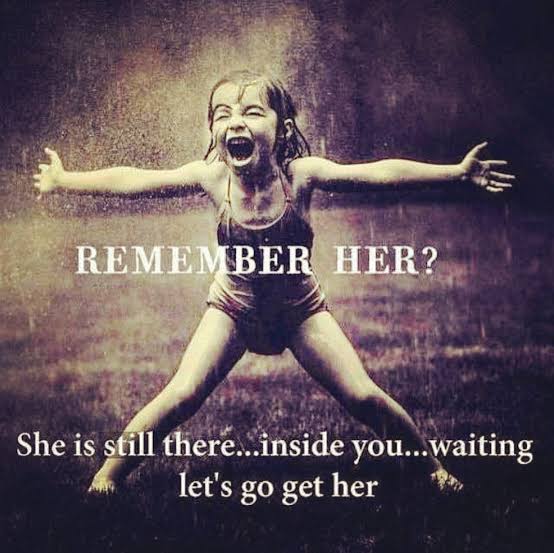
When we slow down enough, we begin to see the world differently. With what I call “baby eyes” — with curiosity, wonder, openness. The world becomes less about performance and more about discovery.

And maybe that’s important, because so many of us move through life carrying the quiet belief that we are somehow not good enough. Not good enough as parents, artists, writers, partners, sons, daughters, or simply as ourselves.

But creativity was never meant to be perfect.

It was never about flawless outcomes or polished appearances. Creativity is the deeply human act of continuing to show up despite uncertainty, despite doubt, despite the messy parts of being alive. It’s writing the paragraph anyway. Painting anyway. Loving anyway. Beginning again anyway.

We honour creativity not because it is perfect, but because it is alive.

I’ve come to believe optimism and creativity are deeply connected. Optimism gives us the belief that something better is possible, and creativity gives us the courage to help build it. Every invention, every piece of art, every act of kindness begins because someone imagined a different possibility for the world.

Creativity isn’t only about making beautiful things. It’s about solving problems, adapting to change, helping others feel seen, and shaping the future through the energy we choose to bring today.

And when life becomes difficult. When uncertainty, grief, or exhaustion arrive, this is when we need to activate compassion… for ourselves.

Speaking gently to ourselves when things feel hard. Accepting that growth is uncomfortable. Allowing ourselves to create imperfectly. Sometimes creativity is simply continuing to move forward in small ways: writing a sentence, helping a friend, reflecting quietly, or allowing ourselves to feel without judgement.

Self-compassion creates the emotional space where resilience, imagination, and hope can grow. It is not a luxury. It’s part of what keeps us connected to ourselves and each other. It reminds us that even in difficult seasons, something new can still emerge.

Take a moment to slow down. Sit quietly. Breathe. Look at the world with curious eyes again.

You will be surprised by what is waiting for you in the stillness.

Magic Hides in Plain Sight

I’m often asked where my creative ideas come from. I usually answer, the world is our greatest teacher. It’s constantly tapping us on the shoulder, whispering reminders to look up, look around, and actually see what’s happening in our lives. Learning doesn’t only happen in textbooks, webinars, or thirty-second clips served to us by an algorithm. It happens in the quiet, ordinary moments we rush past, the stranger who smiles at us in the supermarket aisle, the way the sky shifts colours on our morning walk, or even a sentence on the back of a bus that unexpectedly stirs something inside us. Life is always handing us tiny invitations to wake up and pay attention.

People often assume creativity arrives in dramatic flashes of inspiration, but for me, it’s the opposite. I notice the small things. I pay attention to stuff most people hurry past. The way a child drags their feet when they’re tired, the way a neighbour’s dog pauses as if it understands something I don’t, the way a single sunbeam lands on my desk in the afternoon, these little moments become sparks. They remind me that creativity isn’t about chasing something grand; it’s about being present enough to catch the quiet details life offers freely.

And the best lessons aren’t the ones we memorise; they’re the ones we live. They come from making meaning out of what’s unfolding right in front of us. Each day asks us to move through the world with a little more confidence, a little more steadiness, and a willingness to notice what we usually overlook. When we slow down enough to connect the dots, the simple with the complex, the joyful with the uncomfortable, we begin to understand how to navigate this extraordinary, messy, beautiful life we’re all living. Creativity, it turns out, isn’t something we find. It’s something we’re already surrounded by.