I was 15 years old my Dad gave me a book. He told me to look for the magic in it. It sat on my dresser for months, what would Dad know?
Slowly I started reading I Can by Ben Sweetland then I couldn’t put it down. I hadn’t known the strong link between thinking positively and achievement before reading this book. But the magic for me was learning about visualisation. I immediately put it to work, but probably not in the way my Dad had intended.
I made a goal that the boy two classes ahead would ask if he could take me out and made the commitment to support this goal with visualisation. An impossible dream. Two years difference in age was a lifetime in school years and senior boys were not much interested in grade 10 girls.
But I was not deterred. I was mad about him. So every night before I went to sleep I imagined him coming to my house, knocking at the door. I imagined what I would be wearing. I imagined Dad opening the door with a welcoming smile. I filled in every detail in Technicolor.
Three weeks later, on a Saturday night in late September, Harry came to our front door and collected me for the school dance. I couldn’t believe it. This visualisation really works! I was committed to it for life.
I went on to use visualisation for all sorts of things, improving my swimming, getting a job in the school holidays, and yes, even improving my schoolwork. More like the things my Dad probably had in mind in giving me I Can.
I didn’t tell anyone about my discovery. I think Dad knew I was using it; he had that smile on his face the night Harry came to collect me that looked like he knew something was up.
I also didn’t want to tell anyone in case it broke the magic. Funny.
Years later I started to share the magic when in 1992, I wrote Take Me To My Garden Mummy. This children’s book went viral. I still have children who had read it in 1992 contacting me to buy a copy for their children.
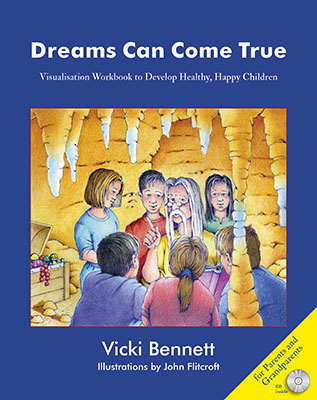
So here is Dreams Can Come True, my latest version of that original idea. It is written for parents, grandparents and teachers to read to primary school children.
Sometimes children need a quiet space of their own where nothing goes wrong. By using their imagination, they can find this special place. Their favourite place may become any one of the seven visualisations in Dreams Can Come True: The Secret Garden, Library of Learning, Magic Cave of Friends, Rainforest Healing, The Beach and the Healing White Light, Flying in the Clouds, Pink Bubble. These become positive places to solve problems, helping to put their young minds to rest.
Visualisation creates an environment for both adults and children to grow and learn, and to engage their imaginations. Adults often say that after a busy day, going to the Secret Garden or Magic Cave of Friends with a child relaxes them as well, and rejuvenates their sometimes flagging spirits.
I have included a CD of these seven visualisations in Dreams Can Come True. The book is beautifully illustrated by John Flitcroft.
www.vickibennett.com.au or www.boolarongpress.com.au